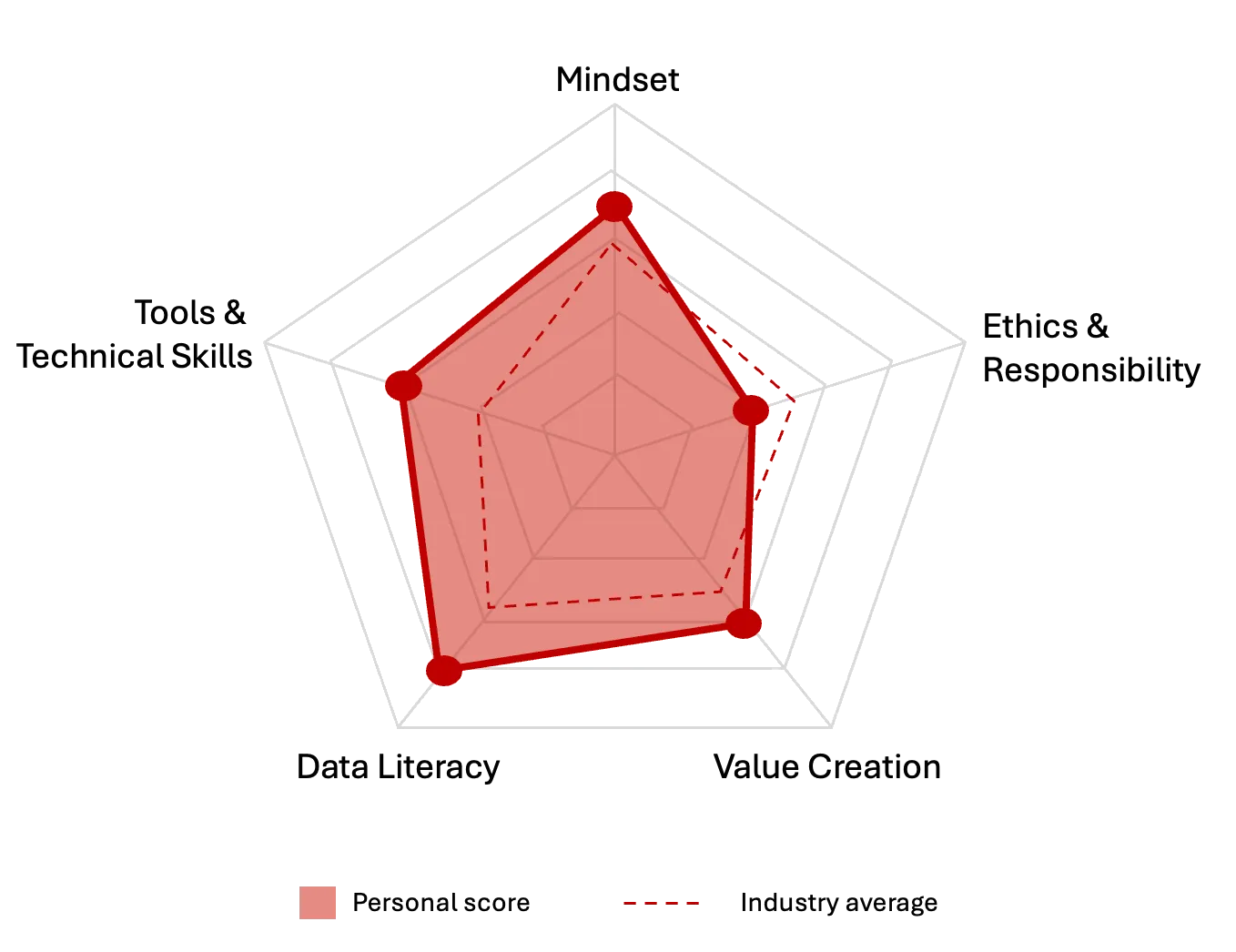
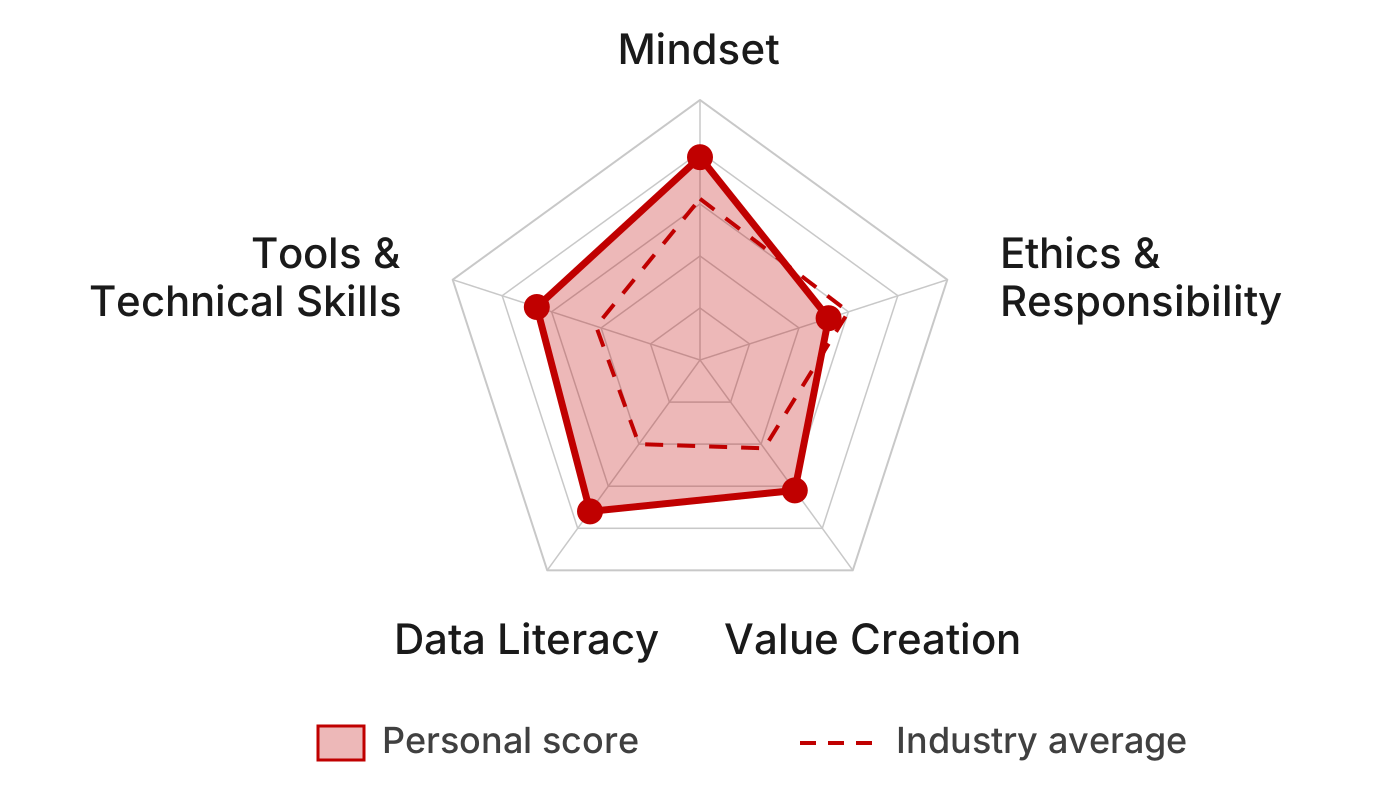
Measures personal attitudes and behaviours toward AI adoption. Five dimensions span five distinct, orthogonal dispositions, because sustained AI readiness requires growth across all five, not excellence in one.
How would you describe your understanding of AI’s potential in your work?
This is the knowledge foundation: a working grasp of what AI and AI agents can and cannot do. We measure understanding only here. Spotting where AI applies to your work is covered later, under Use Case Identification (question 9), and hands-on building under the Tools & Technical Skills pillar (questions 13–15).
How do you approach learning about AI developments?
AI moves fast. What you understand today can be out of date within months, so a one-off grasp is not enough. This question measures whether you have a lasting learning habit; a sustained habit predicts long-term readiness better than any skill you happen to hold today.
How well have you positioned your role for the AI era?
AI takes over routine and coordination work while amplifying human judgement. If you can see which parts of your role AI can take over and which it cannot, you can deliberately shift your time toward the higher-value work. This measures strategic thinking about your career, not how many tools you have adopted.
D4
Delegation Disposition
How willing are you to delegate work to AI and agents and supervise the result?
The defining mindset shift of the agent era: are you willing to hand work to AI and agents and supervise the result, rather than do everything yourself? We measure willingness and trust here. Instructing AI well is Specification Thinking (question 14); checking its work is GenAI Critical Thinking (question 8).
D5
Initiative & Experimentation
How proactively do you try AI on new problems you have never used it for?
This is about drive: do you try AI on problems you have never used it for, on your own initiative? We measure the act of trying here. The working solutions you eventually build are covered by AI-Assisted Creation & Orchestration (question 15), and keeping your knowledge current by Learning Agility (question 2).